Introduction to Glider Rush India
Glider Rush India is a groundbreaking desi mobile game that has taken the Indian gaming market by storm since its launch on 15th August 2022—coinciding with India’s Independence Day, a nod to the game’s deep-rooted national pride. Developed by a team of young Indian developers and published by Daman Games, this endless runner title stands out from the crowd by weaving together heart-pounding gameplay with authentic Indian cultural elements, making it more than just a game—it’s a celebration of Bharat’s diversity.
Unlike international endless runners that often feature generic settings and characters, Glider Rush India puts players in the shoes of desi protagonists, flying through some of the country’s most beloved landmarks, and celebrating festivals that resonate with every Indian household. From the snow-capped Himalayas to the sun-kissed beaches of Goa, from the vibrant streets of Mumbai during Diwali to the colorful lanes of Jaipur during Holi—every level in Glider Rush India feels like a journey across India, right from the comfort of your mobile phone.
The core premise of Glider Rush India is simple yet addictive: players control a glider (customizable with desi themes) and navigate through a series of obstacles while collecting coins, power-ups, and special items. The game’s controls are intuitive—just tap to ascend, release to descend—making it easy for first-time gamers (a large segment of India’s mobile gaming audience) to pick up and play. But don’t let the simplicity fool you—higher levels offer challenging obstacles, fast-paced action, and strategic power-up usage that keeps even seasoned gamers engaged for hours.
Beyond gameplay, Glider Rush India has become a cultural phenomenon, with millions of users sharing gameplay clips on social media platforms like Instagram Reels, YouTube Shorts, and Facebook. From “Glider Challenge” trends to festival-themed cosplays of the game’s characters, the community around Glider Rush India continues to grow, turning the game into a shared experience that brings Indians together—whether they’re in Delhi, Chennai, Kolkata, or a small village in Uttar Pradesh.
Development History
The Idea Behind Glider Rush India
The story of Glider Rush India begins in 2020, when a group of five Indian developers—all alumni of engineering colleges in Bengaluru and Pune—noticed a gap in the mobile gaming market. While international titles like Temple Run and Subway Surfers dominated the endless runner genre, there were very few games that catered to Indian sensibilities. Most games either featured Western characters and settings or poorly executed “desi” themes that felt forced and inauthentic.
“We wanted to create a game that Indians could see themselves in,” says Rakesh Kumar, the lead developer of Glider Rush India. “Growing up, we all loved flying kites during Makar Sankranti—there’s something magical about soaring through the sky, dodging other kites, and feeling the wind in your hair. That’s where the glider concept came from. We thought: why not turn that childhood joy into a mobile game, but with a desi twist?”
The team spent six months researching Indian gaming habits, conducting surveys with over 5,000 mobile gamers across rural and urban India. They found that three key factors mattered most to desi gamers: low file size (since many users have limited storage), offline playability (due to spotty internet connectivity in rural areas), and cultural relevance (games that feel familiar and relatable). Armed with this data, the team set out to build Glider Rush India with these principles at its core.
Challenges in Development
Developing Glider Rush India was not without its challenges. The biggest hurdle was optimizing the game for low-end devices. In India, over 60% of mobile gamers use devices with 2GB RAM or less, and many rely on 2G or 3G networks. The team had to compress graphics, reduce file size (to under 50MB), and ensure the game ran smoothly without lag—even on devices that were five years old.
“We had to make tough choices,” recalls Priya Menon, the game’s art director. “We wanted to include high-quality visuals of Indian landmarks, but we also needed the game to load quickly. So we used a 2D cartoon style inspired by Madhubani and Warli folk art—this not only reduced file size but also gave the game a unique desi aesthetic that stood out. We also optimized the game’s code to use minimal battery and data—something that’s crucial for users who don’t have access to regular charging or unlimited data plans.”
Another challenge was ensuring cultural authenticity. The team traveled across India to research landmarks, festivals, and local traditions. They visited the Taj Mahal to study its architecture, attended Holi celebrations in Mathura to capture the vibrant colors, and worked with regional artists to design characters and power-ups that reflected India’s diversity. They also hired voice actors from 15 different Indian languages to record in-game dialogues and sound effects—ensuring that users from Tamil Nadu, Kerala, Punjab, and Assam all felt represented.
Partnership with Daman Games
In 2021, the development team approached Daman Games—a leading Indian mobile gaming publisher known for supporting desi-themed games—for funding and distribution. Daman Games was immediately impressed by the game’s concept and the team’s commitment to accessibility and cultural relevance. “Glider Rush India aligned perfectly with our mission to promote Indian gaming talent and create content that resonates with Bharat,” says Ankit Patel, CEO of Daman Games.
Daman Games provided the team with additional resources to refine the game, expand the number of landmarks and characters, and launch a targeted marketing campaign. The publisher also helped the game secure partnerships with Indian brands like Parle G, Jio, and Amul—allowing for in-game promotions and exclusive rewards that appealed to Indian users. With Daman Games’ support, Glider Rush India was able to reach a wider audience and gain traction even before its official launch.
Launch and Post-Launch Support
Glider Rush India was launched on 15th August 2022, with a grand virtual event attended by Indian gaming influencers, celebrities, and government officials. The launch campaign focused on the game’s desi identity, with taglines like “Fly Desi, Play Desi” and “Glider Rush India: For Bharat, By Bharat.” The campaign resonated with users, and the game crossed 1 crore downloads within the first week of launch.
Since launch, the development team has maintained a consistent update schedule, releasing new content every 2-3 months. These updates have included new landmarks (like the Red Fort, Charminar, and Golden Temple), festival-themed events (Diwali, Holi, Navratri, Ganesh Chaturthi), and new characters and power-ups. The team also actively listens to player feedback, with a dedicated community forum and social media channels where users can suggest improvements. Many of these suggestions—like a data saver mode and offline leaderboards—have been incorporated into the game.
Gameplay Mechanics
At its core, Glider Rush India is an endless runner game with intuitive controls and addictive gameplay—but it’s the desi twists that make it unique. Whether you’re a casual gamer looking to kill time or a competitive player aiming for the top of the leaderboards, Glider Rush India offers something for everyone.
Core Gameplay
The objective of Glider Rush India is simple: fly your glider as far as possible while avoiding obstacles, collecting coins, and unlocking rewards. The game starts with a tutorial that teaches players the basics: tap the screen to make the glider ascend, release to descend, and swipe left/right to switch lanes (in some levels). The controls are responsive and easy to master—even for users who have never played a mobile game before.
As you fly, you’ll encounter a variety of obstacles that vary depending on the level. In urban levels (like Mumbai or Delhi), obstacles include auto rickshaws, local trains, and tall buildings. In rural levels (like Punjab or Kerala), obstacles include trees, windmills, and farm animals. In festival levels (like Diwali or Holi), obstacles include firecrackers, water balloons, and dandiya sticks. Colliding with an obstacle ends the run—unless you have a power-up that grants invincibility.
Coins are scattered throughout each level, and collecting them allows you to unlock new gliders, characters, and power-ups. There are also special items to collect, like marigold garlands (which give bonus points) and ladoos (which fill up a “desi meter” that grants a special power-up when full). The game tracks your distance, score, and coins collected, and you can compete with friends and other players on regional and national leaderboards.
Game Modes
Glider Rush India offers three main game modes, each catering to different playstyles:
Endless Mode
The classic endless runner experience—fly as far as you can, with the difficulty increasing as you progress. Perfect for casual gamers who want to play in short bursts (like during a commute or while waiting for chai).
Mission Mode
Complete a series of desi-themed missions, like “Collect 50 ladoos in the Taj Mahal level” or “Fly through 10 rangoli gates in Jaipur.” Each mission rewards you with coins, power-ups, and exclusive skins.
Festival Mode
Limited-time events tied to Indian festivals. During Diwali, you’ll fly through a lit-up Delhi with firecracker obstacles and fairy light power-ups. During Holi, you’ll dodge water balloons and collect color packets that grant speed boosts. These modes offer exclusive rewards that can’t be obtained elsewhere.
Power-Ups
Power-ups are a key part of Glider Rush India’s gameplay, and they’re all designed with desi themes in mind. Here are some of the most popular power-ups:
- Chai Boost 🫖: Grants a 10-second speed boost and invincibility. The glider leaves a trail of chai steam, and the sound effect is of a kettle boiling. Perfect for escaping tight spots or covering long distances quickly.
- Rangoli Shield 🎨: Protects your glider from one obstacle. The shield is designed like a colorful rangoli, and it breaks with a satisfying “crunch” sound when hit. Unlocked by collecting 3 rangoli pieces in a level.
- Ladoo Magnet 🍬: Attracts all coins and special items in the vicinity for 15 seconds. The magnet is shaped like a ladoo, and coins fly toward you with a sweet jingle. Ideal for maximizing coin collection.
- Ganpati Blessing 🙏: Transforms your glider into a giant Ganpati-themed glider that can smash through obstacles. The power-up is activated when you collect 5 Ganesh idols, and it plays a traditional Ganpati aarti in the background. One of the most powerful power-ups in the game.
- Garba Rhythm 🎶: Syncs your glider’s movement to garba music, making it easier to dodge obstacles. The glider bounces to the beat, and obstacles flash in time with the music. Available exclusively during the Navratri event.
Customization
Glider Rush India offers a wide range of customization options, allowing players to personalize their glider and character to reflect their desi style. Here’s what you can customize:
Gliders
There are over 50 gliders to unlock, each with unique designs and stats (like speed, maneuverability, and coin collection rate). Some popular gliders include:
- Jute Kite Glider: Inspired by Makar Sankranti kites, made of jute and colorful threads. Perfect for rural levels.
- Delhi Metro Glider: Designed to look like a Delhi Metro train, with the Indian flag on the wings. Fast and maneuverable.
- Diwali Lantern Glider: Shaped like a Diwali lantern, with fairy lights that glow as you fly. Unlocked during the Diwali event.
- Amul Butter Glider: A collaboration with Amul, shaped like a butter packet. Grants a 20% bonus to coin collection.
Characters
There are 12 playable characters, each with a unique backstory and special ability. Characters are unlocked by completing missions or purchasing them with coins. Some fan favorites include:
- Ravi the Farmer: A Punjabi farmer who uses his glider to transport crops. Special ability: Collects extra coins from agricultural obstacles (like tractors and hay bales).
- Priya the Student: A Chennai-based college student who loves adventure. Special ability: Can squeeze through small gaps between obstacles.
- Raj the Office Worker: A Delhiite who uses his glider to beat traffic. Special ability: Faster coin collection in urban levels.
- Meera the Artist: A Rajasthan-based folk artist who paints her glider with Madhubani designs. Special ability: Power-ups last 50% longer.
Leaderboards and Competitions
Glider Rush India’s leaderboards are a big part of its appeal, especially for competitive gamers. There are four types of leaderboards:
- Daily Leaderboard: Tracks the top scores for the day. The top 10 players get free coins and power-ups.
- Weekly Leaderboard: Tracks scores over the week. The top 3 players win cash prizes (up to ₹10,000) and exclusive glider skins.
- Regional Leaderboard: Groups players by their state or region (e.g., Tamil Nadu, Maharashtra, North India). This allows players from small towns to compete with others in their area, making the leaderboards more accessible.
- National Leaderboard: The ultimate bragging right—tracks the top players across India. The national champion is featured on the game’s loading screen and social media.
The game also hosts monthly tournaments called “Glider Champions League,” with regional qualifiers and a national final. Prizes include cash rewards (up to ₹1 lakh for the national winner), smartphones from Indian brands like Xiaomi and Realme, and brand vouchers from Amazon and Flipkart. These tournaments have become extremely popular, with over 5 lakh players participating each month.
Cultural Integration: The Heart of Glider Rush India
What truly sets Glider Rush India apart from other mobile games is its deep integration of Indian culture. Every aspect of the game—from the landmarks to the festivals, from the characters to the sound design—has been crafted to reflect India’s diversity and heritage. For many players, Glider Rush India isn’t just a game—it’s a way to connect with their roots and celebrate their culture.
Iconic Indian Landmarks
The game features over 20 iconic Indian landmarks, each recreated with stunning attention to detail. These landmarks aren’t just backdrops—they’re an integral part of the gameplay, with obstacles and challenges tailored to each location. Here are some of the most popular landmarks in Glider Rush India:
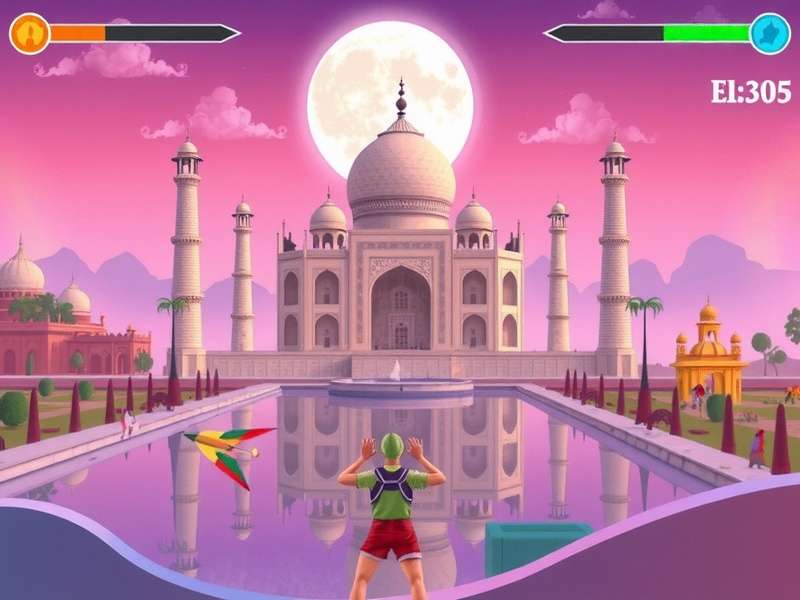
Taj Mahal (Agra)
Fly around the white marble monument, avoid flying lanterns (Diwali-themed), and collect marigold garland coins. The background music features classical Indian instrumental tunes.
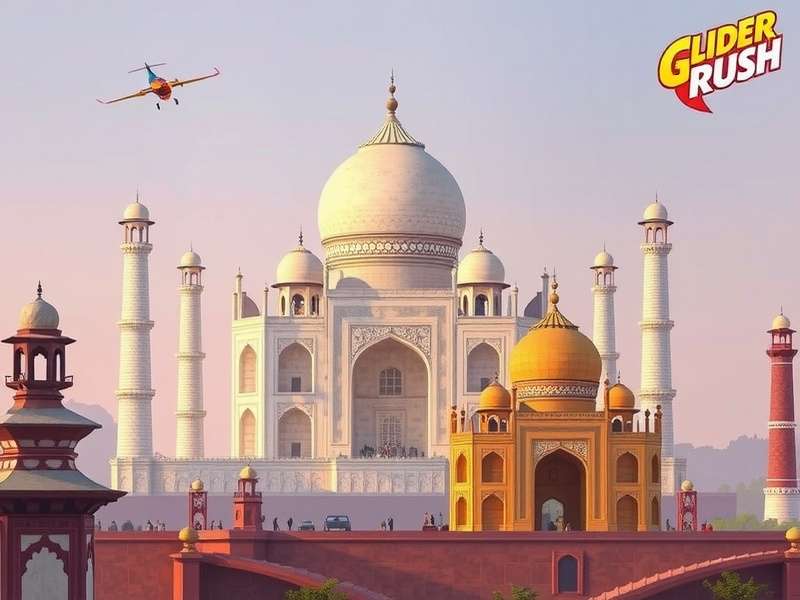
Gateway of India (Mumbai)
Navigate through ships in the harbor, dodge seagulls, and avoid auto rickshaws on the nearby streets. The level features the sound of waves and local train announcements.
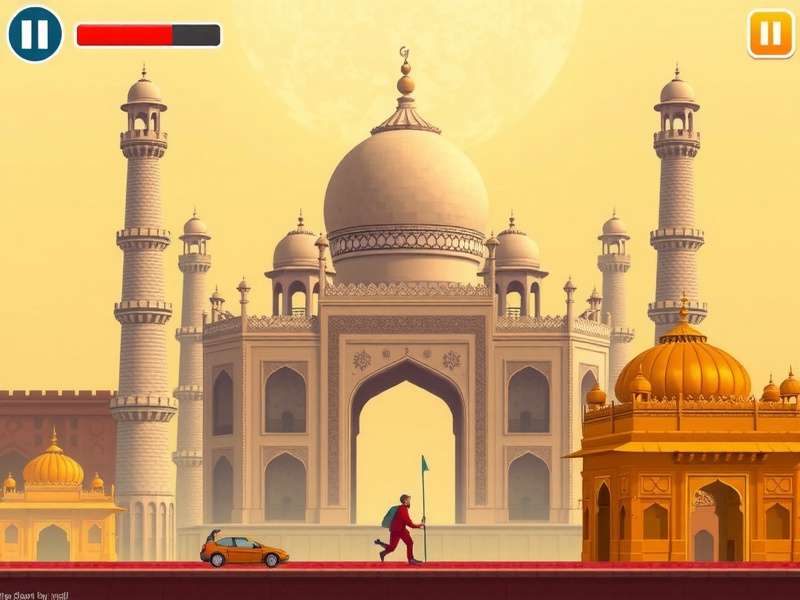
Hawa Mahal (Jaipur)
Fly through the windows of the “Palace of Winds,” avoid peacocks (India’s national bird), and collect bangle-shaped coins. The level’s music features Rajasthani folk tunes.
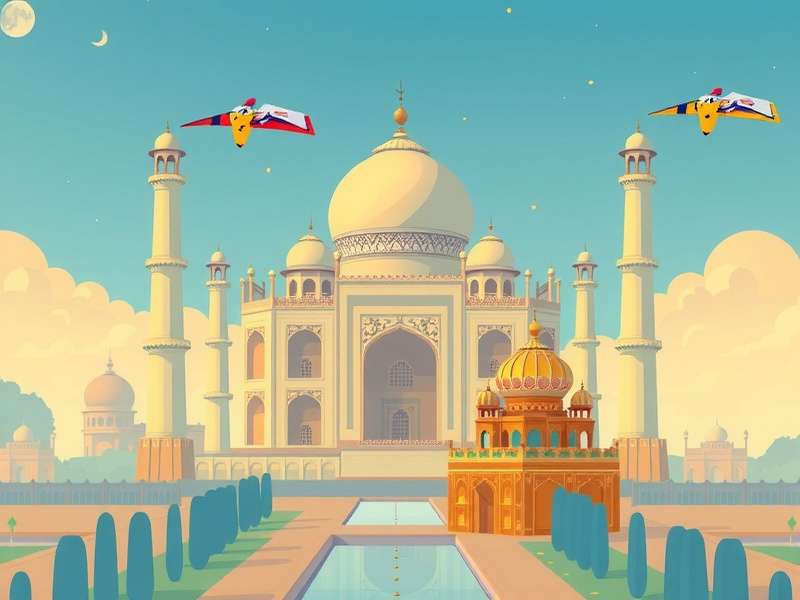
Golden Temple (Amritsar)
Soar over the sacred lake, avoid prayer flags, and collect coins shaped like kadas (Sikh bangles). The background features Gurbani recitations and peaceful instrumental music.
Other landmarks include the Red Fort (Delhi), Charminar (Hyderabad), Qutub Minar (Delhi), Konark Sun Temple (Odisha), Meenakshi Temple (Madurai), and the Himalayas (Uttarakhand). Each landmark level is designed in collaboration with local artists and historians to ensure accuracy and cultural respect.
Festival Celebrations
Glider Rush India celebrates all major Indian festivals with limited-time events and exclusive content. These events are some of the most popular in the game, with millions of players participating to unlock festival-themed rewards. Here’s how the game celebrates some of India’s biggest festivals:
Diwali 🎆
The Diwali event is the game’s biggest festival celebration, running for 15 days in October/November. The game’s levels are decorated with fairy lights, rangoli, and diyas. Obstacles include firecrackers and flying lanterns, while power-ups include the “Diwali Rocket” (which clears all obstacles in a line) and the “Lakshmi Blessing” (which doubles coin collection). Players can unlock a Diwali-themed glider (shaped like a rocket) and a character dressed as a pandit.
Holi 🎨
The Holi event runs for 10 days in March, featuring levels covered in colorful powder. Obstacles include water balloons and dandiya sticks, while power-ups include the “Color Blast” (which clears obstacles and paints the screen with Holi colors) and the “Bhang Boost” (which grants invincibility and a speed boost). Exclusive rewards include a Holi-themed glider (shaped like a water gun) and a character dressed in traditional Holi attire.
Navratri 🕺
The Navratri event celebrates the nine nights of worship, with levels decorated with garba decorations and diyas. The gameplay is synced to garba music, and obstacles include dandiya sticks and traditional Gujarati thalis. The “Garba Rhythm” power-up makes it easier to dodge obstacles by syncing glider movement to the beat. Exclusive rewards include a garba-themed glider and a character dressed as a garba dancer.
Ganesh Chaturthi 🙏
The Ganesh Chaturthi event runs for 10 days in August/September, featuring levels with Ganesh idols and modaks (Ganesh’s favorite sweet). Obstacles include flower garlands and pandals, while power-ups include the “Ganpati Blessing” (the game’s most powerful power-up) and the “Modak Magnet” (which attracts coins and special items). Players can unlock a Ganesh-themed glider and a character dressed as a priest.
Other festivals celebrated in the game include Makar Sankranti (kite-flying event), Pongal (Tamil harvest festival), Onam (Kerala harvest festival), and Eid (with special Islamic-themed decorations and rewards).
Desi Characters and Stories
The game’s characters are all inspired by real-life Indians, with backstories that resonate with players. Each character hails from a different region of India, representing the country’s linguistic and cultural diversity. For example:
- Ravi the Farmer is from Punjab, and his backstory involves using his glider to transport crops to market faster than traditional methods. His dialogue is in Punjabi (with subtitles), and he often references Punjab’s culture (like bhangra and sarson ka saag).
- Priya the Student is from Chennai, and her backstory is about exploring her city on weekends with her friends. Her dialogue is in Tamil, and she references Chennai’s landmarks (like Marina Beach) and food (like dosa and idli).
- Meera the Artist is from Rajasthan, and her backstory involves traveling across India to paint folk art on landmarks. Her dialogue is in Hindi with Rajasthani accents, and she references Rajasthan’s culture (like camel rides and ghagra cholis).
- Abdul the Mechanic is from Hyderabad, and his backstory is about fixing gliders for local children. His dialogue is in Urdu and Telugu, and he references Hyderabad’s food (like biryani) and landmarks (like Charminar).
The characters’ dialogues are recorded by voice actors from their respective regions, ensuring authenticity. This attention to detail has made the characters beloved by players, who often see themselves or people they know in them.
Sound Design and Music
The sound design of Glider Rush India is another key element of its cultural integration. The game features original music composed by Indian musicians, with each level having a soundtrack that reflects the region’s folk music. For example:
- North Indian levels (Delhi, Punjab) feature bhangra and classical Hindustani music.
- South Indian levels (Chennai, Bangalore) feature Carnatic music and Tamil folk tunes.
- West Indian levels (Mumbai, Gujarat) feature garba and dandiya music.
- East Indian levels (Kolkata, Assam) feature Rabindra Sangeet and Bihu music.
The game also includes sound effects that are familiar to Indians, like the honking of auto rickshaws, the chimes of temple bells, the crackling of Diwali firecrackers, and the sound of chai being poured. These sound effects create an immersive experience that makes players feel like they’re flying through real Indian streets and landmarks.
In addition, the game supports 15 Indian languages, including Hindi, Tamil, Telugu, Bengali, Kannada, Malayalam, Marathi, Gujarati, Punjabi, Bhojpuri, Odia, Assamese, Urdu, Konkani, and Manipuri. Players can switch between languages in the settings menu, making the game accessible to non-Hindi speakers—a crucial feature in a linguistically diverse country like India.
Player Base and Community
Glider Rush India has built one of the most active and engaged gaming communities in India, with millions of players interacting with the game and each other across social media, forums, and in-game events. The game’s community is diverse, with players of all ages, genders, and backgrounds—united by their love for desi gaming and Glider Rush India.
Demographics
According to data from Daman Games, Glider Rush India’s player base is spread across India, with a strong presence in both urban and rural areas. Here’s a breakdown of the game’s demographics:
- Age: 60% of players are between 18-25 years old, 25% are 12-17 years old, and 15% are 26-40 years old. The game’s simple controls and family-friendly content make it popular with both teenagers and young adults.
- Gender: 60% male, 40% female. This is a higher percentage of female players than most mobile games in India, thanks to the game’s inclusive characters and family-friendly content.
- Region: 40% of players are from tier 1 cities (Delhi, Mumbai, Bangalore, Chennai), 35% from tier 2 cities (Lucknow, Jaipur, Ahmedabad, Pune), and 25% from tier 3 cities and rural areas. The game’s low file size and offline playability have made it accessible to players in rural India, where mobile gaming is growing rapidly.
- Language: 45% of players use Hindi, 25% use Tamil/Telugu, 15% use Bengali/Kannada/Malayalam, and 15% use other regional languages. The game’s multilingual support has been key to its success across India.
Social Media Presence
Glider Rush India has a strong social media presence, with over 2 million followers on Facebook, 1.5 million on Instagram, and 500,000 on YouTube. The game’s social media accounts are managed by a team of Indian content creators who post engaging content tailored to desi audiences, including:
- Gameplay clips and tips (like how to unlock rare gliders or beat difficult levels).
- Festival-themed content (like Diwali glider reveals or Holi challenge videos).
- User-generated content (UGC) from players, including gameplay clips, fan art, and cosplays.
- Interviews with the development team and Indian gaming influencers.
- Contests and giveaways (like “Share your Glider Rush India gameplay for a chance to win a smartphone”).
The game’s Instagram Reels and YouTube Shorts are particularly popular, with videos often going viral. For example, a recent Reel of a player flying through the Taj Mahal level with the Diwali Rocket power-up received over 10 million views and 500,000 likes. Many Indian gaming influencers have also started playing Glider Rush India, including CarryMinati, Ashish Chanchlani, and Bhuvan Bam—further boosting the game’s popularity.
Community Events
The Glider Rush India team organizes regular community events to keep players engaged and foster a sense of belonging. These events include:
User-Generated Content Contests
Monthly contests where players submit fan art, gameplay clips, or cosplays of the game’s characters. The best entries are featured on the game’s social media, and winners receive prizes like free coins, exclusive glider skins, or smartphones. For example, the “Glider Rush India Holi Cosplay Contest” received over 1 lakh entries, with the winner getting a trip to Mathura to celebrate Holi.
Meet-and-Greets
Virtual and in-person meet-and-greets with the development team and gaming influencers. These events allow players to ask questions, share feedback, and interact with other fans. In 2023, the team organized in-person meet-and-greets in Delhi, Mumbai, Bangalore, and Chennai, with thousands of players attending each event.
Community Forums
A dedicated forum on the game’s website where players can discuss gameplay, share tips, suggest improvements, and report bugs. The development team actively moderates the forum and responds to player feedback—many of which have been incorporated into the game. For example, the data saver mode and offline leaderboards were both suggested by players on the forum.
Charity Events
The game also organizes charity events to give back to the community. For example, during the 2023 Kerala floods, the team launched a “Fly for Kerala” event where 50% of in-app purchase revenue was donated to flood relief. The event raised over ₹50 lakh, which was donated to the Kerala Chief Minister’s Relief Fund. Similarly, during the COVID-19 pandemic, the team organized a “Glider for Vaccines” event to raise funds for free vaccines in rural areas.
Player Feedback and Engagement
The Glider Rush India team places a strong emphasis on player feedback, recognizing that it’s key to the game’s success. The team uses a variety of channels to collect feedback, including:
- In-game surveys (pop-ups after completing a level).
- Social media comments and direct messages.
- The community forum.
- Focus groups with players from different regions and demographics.
Every month, the team publishes a “Feedback Report” on social media, highlighting the top player suggestions and explaining which ones have been implemented or are in development. This transparency has helped build trust with the community, making players feel like they have a stake in the game’s future.
One example of player feedback leading to a major update is the addition of a “Senior Mode” in 2023. Players suggested a mode with slower gameplay, larger obstacles, and simpler controls for older family members who wanted to play with their children. The team developed Senior Mode, which has since become popular with players of all ages who prefer a more relaxed gaming experience.
Reception and Impact
Since its launch, Glider Rush India has received widespread acclaim from players, critics, and industry experts. The game’s unique blend of addictive gameplay, cultural relevance, and accessibility has made it one of the most successful Indian mobile games of all time, and it has had a significant impact on the Indian gaming industry.
Critical Reception
Glider Rush India has been praised by Indian gaming publications and critics for its attention to detail, cultural authenticity, and optimization for Indian devices. Here are some excerpts from key reviews:
The game has also received positive reviews from international publications, with Pocket Gamer calling it “a masterclass in cultural localization” and App Store Arcade naming it one of the “Best Mobile Games of 2022.”
Commercial Success
Glider Rush India has been a commercial juggernaut, breaking several records in the Indian mobile gaming market:
- Over 6 crore downloads across Google Play Store and Apple App Store (as of 2025).
- 1 crore downloads in the first week of launch—making it the fastest-downloaded desi mobile game of all time.
- 4.5-star rating from 10 lakh+ reviews on Google Play Store and 4.6-star rating from 2 lakh+ reviews on Apple App Store.
- Over ₹100 crore in revenue from in-app purchases and ad revenue (as of 2025).
- Top 5 grossing mobile game in India for 18 consecutive months (2023-2025).
The game’s success has also been driven by its brand partnerships. Collaborations with Parle G, Jio, and Amul have not only increased the game’s visibility but also provided players with exclusive rewards that encourage engagement. For example, Jio users get a free Daman Games-themed glider and 500 coins, while Parle G’s “Collect the Biscuit” in-game event drove over 50 lakh new downloads.